
Project description
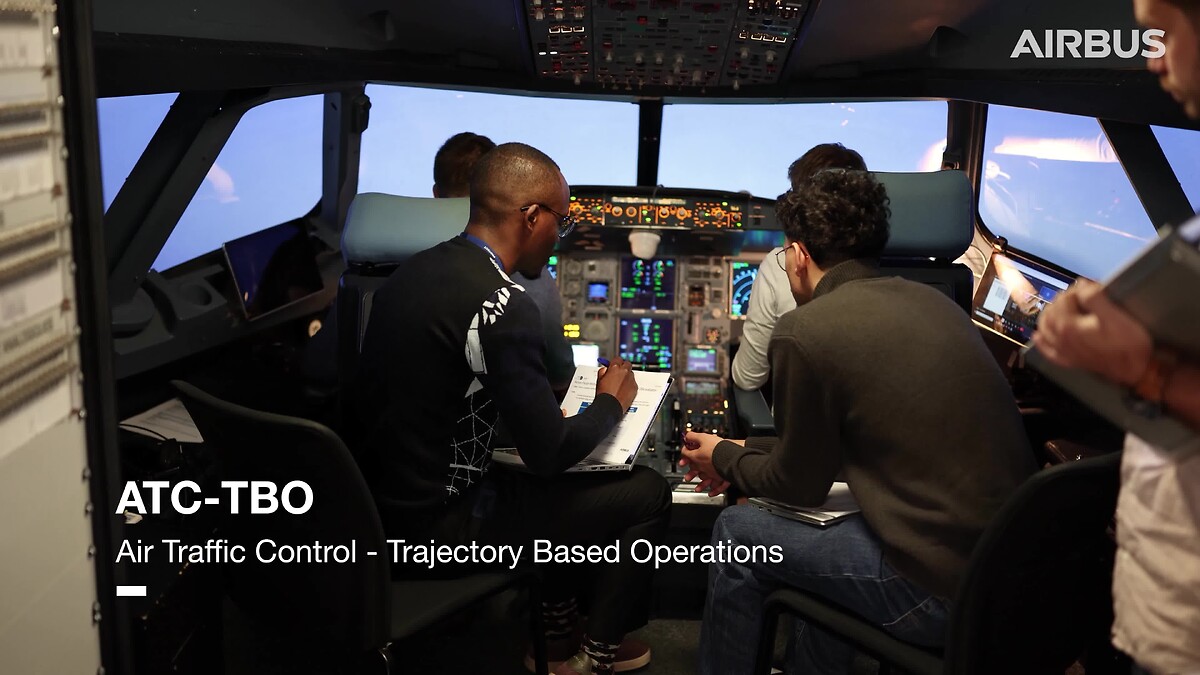
Part of the European SESAR 3 programme, the ATC TBO project validates solutions for flight trajectories in the tactical phase. By synchronising real-time data between aircraft and ground control, we aim to optimise flight paths, reduce fuel consumption, and improve operational efficiency across European airspace.
For more information on ATC TBO, check Guillaume Faury's LinkedIn post.
ATC-TBO and Swiss
Funding bodies

European Comission | 
SESAR JU | 
EUROCONTROL
|
Overcoming airspace congestion and carbon emissions
Challenge
As air traffic recovers and grows, the traditional method of managing flights in "steps" creates bottlenecks and unnecessary fuel burn. The challenge is to increase airspace capacity and significantly reduce CO2 emissions without ever compromising the industry’s number one priority: safety.
Implementing real time 4D trajectory synchronisation
Solution
Airbus is validating Trajectory Based Operations (TBO) that allow a continuous, four dimensional (latitude, longitude, altitude, and time) exchange of data between the cockpit and Air Traffic Controllers. This "Connected Aircraft" approach ensures a continuous sharing of flown trajectory, in order to permanently facilitate its optimisation and - when necessary, allow minimizing the impact of a resolution measure.
Maximising operational performance and airspace capacity
Benefits
- Environmental: Immediate reduction in fuel burn and CO2 emissions through an optimal interaction between Flight deck and Air Traffic Control, thus reducing unnecessary buffers in managing traffic.
- Operational: Greater predictability and reduced workload for both pilots and controllers.
- Capacity: Increased ability to handle more flights within the same airspace safely.
- Customer centric: Shorter flight times and improved punctuality for passengers.


